When you hire a professional remediation company after an accident, suicide, or severe contamination event in Fort Myers, they do not just show up and start scrubbing. Biohazard remediation is a highly regimented scientific process.
Short Answer: Professional emergency cleanup relies on a strict strategy: establishing containment to prevent cross-contamination, removing physical biological matter, surgically removing affected porous materials, treating the area with hospital-grade antimicrobials, and utilizing advanced equipment for permanent odor removal.
Understanding these strategies helps property owners realize why DIY cleaning is impossible and why a professional local biohazard cleanup company in Fort Myers is worth the investment. Here is an inside look at the strategies we use in the field.
Strategy 1: Establishing the Control Zones
The very first thing a professional team does upon arriving at a property in Cape Coral or Bonita Springs is establish three distinct zones: the Clean Zone, the Transition Zone, and the Hot Zone.
- Hot Zone: This is the area where the biohazard event occurred (e.g., the specific room of an unattended death). No one enters this zone without full Level C Personal Protective Equipment (PPE).
- Transition Zone: This is a taped-off staging area right outside the Hot Zone. It is where technicians don and doff their PPE to prevent tracking blood or bacteria into clean areas of the home.
- Clean Zone: The rest of the house. By using heavy plastic sheeting and negative air pressure machines, technicians ensure airborne pathogens stay trapped in the Hot Zone.
Without establishing these control zones, an amateur cleaner will inevitably track invisible pathogens from the contaminated room into the clean hallway on the soles of their shoes.
Strategy 2: The Physical Removal (Source Eradication)
You cannot disinfect a room if the source of the bacteria is still present. In a sewage backup or blood cleanup scenario, the primary goal is source removal.
Technicians first manually extract the bulk biological fluids. However, in older Fort Myers homes, fluids often soak through the carpet and padding into the wood subfloor. The strategy here is "surgical demolition." Technicians carefully cut out and remove the contaminated carpet, padding, and affected drywall sections. This ensures that no hidden bacteria are left behind to rot in the Florida heat.
Strategy 3: ATP Testing and Disinfection
Once the physical matter is gone, the chemical disinfection begins. Professionals do not use bleach. They use EPA-registered, hospital-grade enzymatic cleaners designed to break down the proteins in human blood and bodily fluids.
To verify the cleanliness, many teams use ATP (Adenosine Triphosphate) fluorescence testing. This is the same testing technology used in hospitals to measure the number of living cellular organisms on a surface. The area is not considered clean until the ATP swab returns a near-zero reading.
An ATP test provides a scientific metric for cleanliness, giving you concrete proof that the room is completely decontaminated and safe for occupancy.
Strategy 4: Permanent Odor Elimination
The final and often most difficult strategy is odor removal. Severe decomposition or hoarding odors consist of microscopic volatile organic compounds (VOCs) that embed themselves in the HVAC system and structural wood.
"Odor elimination is the difference between a house that is truly clean and a house that just looks clean."
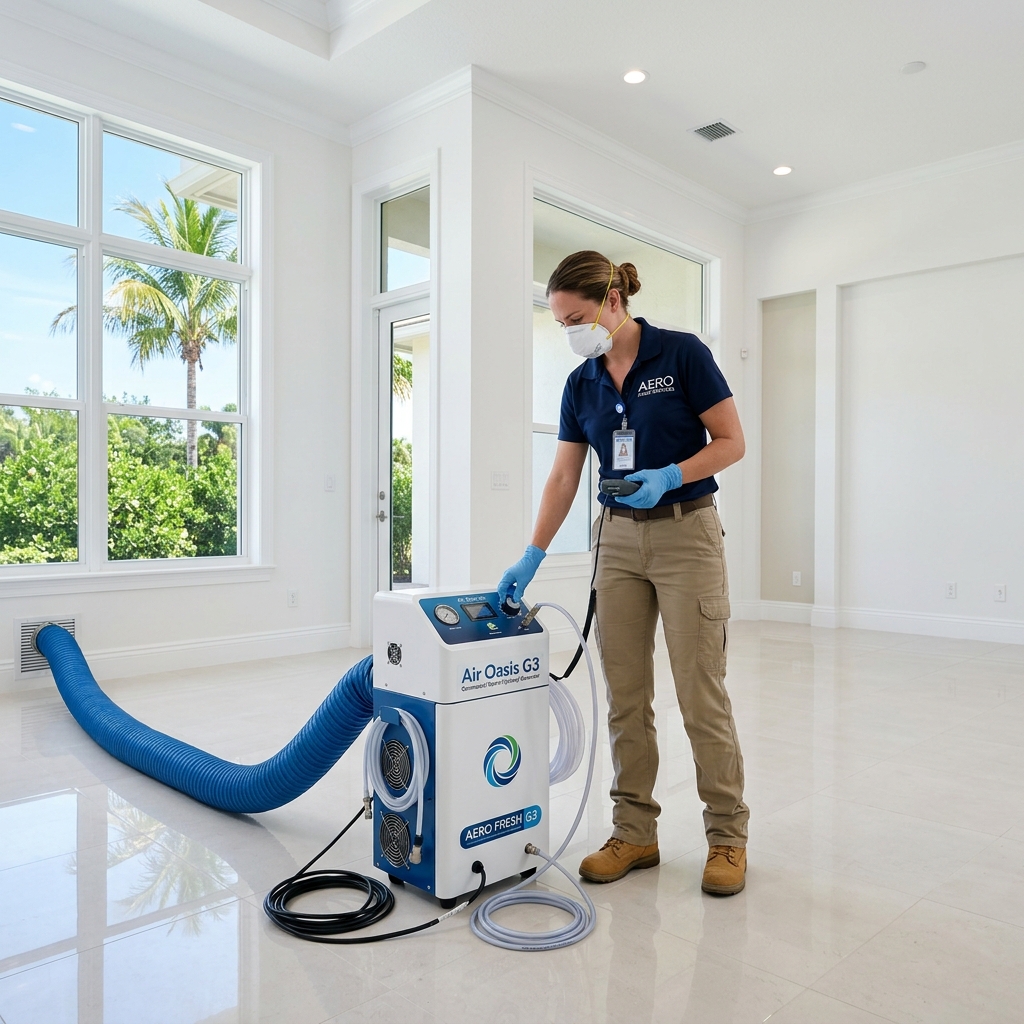
Technicians deploy thermal foggers, which vaporize odor-neutralizing chemicals, allowing them to penetrate deep into the pores of the drywall—exactly how the odor molecules did. Additionally, hydroxyl generators are run continuously for several days to scrub the airborne bacteria from the environment, leaving the home smelling fresh and completely restored.