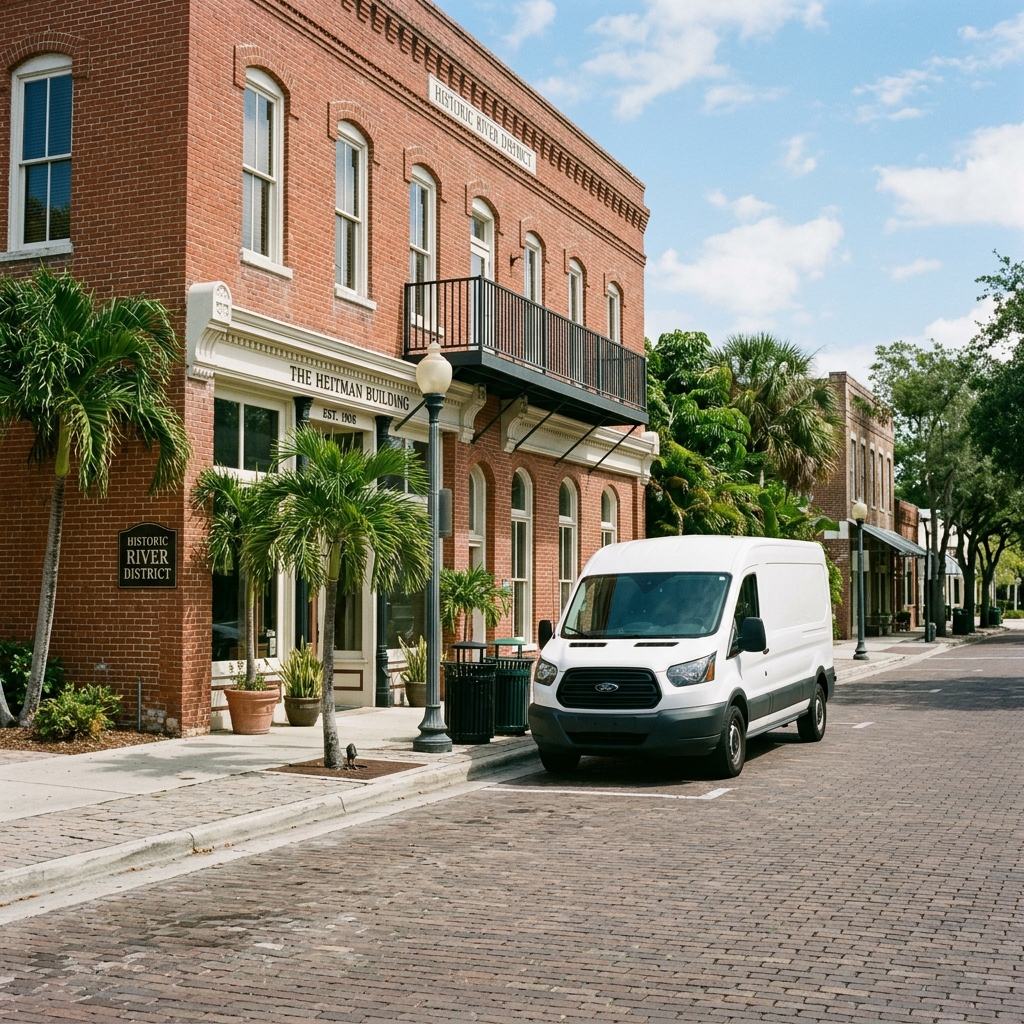
Downtown Fort Myers, particularly the River District, is a vibrant mix of historic brick buildings, modern high-rise condos overlooking the Caloosahatchee River, and busy commercial spaces. When a biohazard event occurs in this dense urban environment, the response requires much more than just a mop and bucket.
Short Answer: Biohazard cleanup near Downtown Fort Myers requires specialized logistics, including discreet service in high-traffic areas, structural knowledge of historic buildings, and advanced odor control for multi-unit condos. Hiring a local company ensures rapid response and adherence to Lee County disposal regulations.
Whether a property manager is dealing with a trauma incident in an office building or a family is facing an unattended death in an older home near Dean Park, the challenges of working downtown are unique. As a local biohazard cleanup company in Fort Myers, we understand the specific nuances of River District remediation.
The Logistics of Downtown Cleanup
Unlike a suburban home in Gateway where a service truck can simply park in the driveway, downtown biohazard remediation involves complex logistics.
- Discreet Operations: The River District is filled with restaurants, tourists, and foot traffic. A biohazard event can cause panic and harm a business's reputation. Professional teams use unmarked vehicles and discreet equipment loading protocols to minimize public attention during a trauma cleanup.
- Access Limitations: High-rise condos and commercial buildings require coordinating with HOA boards and property managers to secure service elevator access for the safe transport of biohazardous waste.
- After-Hours Response: To protect the operations of downtown businesses, remediation teams often deploy after regular business hours or during the night, ensuring the space is safe and ready for employees by the next morning.
Proper coordination with building management is critical in downtown environments. A professional team manages these communications directly so you don't have to.
Protecting Historic Structures
Many buildings near First Street, Hendry Street, and the surrounding Edison Park neighborhoods are historically significant. When a blood cleanup is required in these properties, technicians cannot just rip out drywall and throw it away.
Historic structures often feature original hardwood floors, lath-and-plaster walls, and unique architectural details. If biological fluids seep into these porous materials, standard cleaning chemicals will ruin them, and aggressive removal can damage the structural integrity of the home. Technicians must use specialized enzymatic cleaners and precise extraction methods to preserve as much of the historic material as possible while still ensuring complete decontamination.
Urban Biohazard Challenges
Urban environments also present external biohazard risks. Downtown alleys, parking garages, and secluded areas sometimes become sites for illegal dumping or transient activity.
Property managers frequently require homeless encampment cleanup or sharps disposal services. Discarded needles, human waste, and contaminated clothing pose severe liability risks for commercial property owners. A professional team safely removes these hazards, applying hospital-grade disinfectants to the affected pavement or alcoves to protect the public.
If you own a commercial property downtown, establish a relationship with a local biohazard response team before an incident occurs. Having an emergency plan minimizes downtime and liability.
Advanced Odor Control for Multi-Unit Buildings
In high-density downtown housing, an odor problem in one unit quickly becomes an odor problem for the entire floor. In the Florida heat, decomposition odors from an unattended death or a severe hoarding situation migrate rapidly through shared HVAC ducts and plumbing voids.
"You cannot isolate an odor in an apartment building by simply closing the door. Professional odor counteractants and negative air pressure are required to protect neighboring tenants."
Technicians utilize hydroxyl generators and ozone treatments to neutralize volatile organic compounds (VOCs) at the molecular level, ensuring the odor removal is permanent and not just masked by fragrances.