Fort Myers boasts a beautiful mix of historic riverfront estates, mid-century ranch homes, and sprawling high-rise condominiums along the Gulf Coast. While this architectural diversity gives the city its charm, it presents highly specific complications when a trauma event, suicide, or unattended death occurs inside these structures.
Short Answer: Older homes and multi-unit buildings present complex biohazard cleanup challenges because fluids easily seep through aging floorboards, while odors migrate rapidly through shared HVAC systems and thin shared walls. Proper remediation requires strict containment to protect neighboring units and specialized structural removal techniques.
Whether you manage an apartment complex in Cape Coral, serve on an HOA board in Estero, or own an older property near Dean Park, you must understand why standard cleaning methods simply do not work in these environments. Here is a breakdown of the specific challenges a local biohazard cleanup company in Fort Myers must overcome to safely restore these properties.
The Complexity of Multi-Unit Condos and Apartments
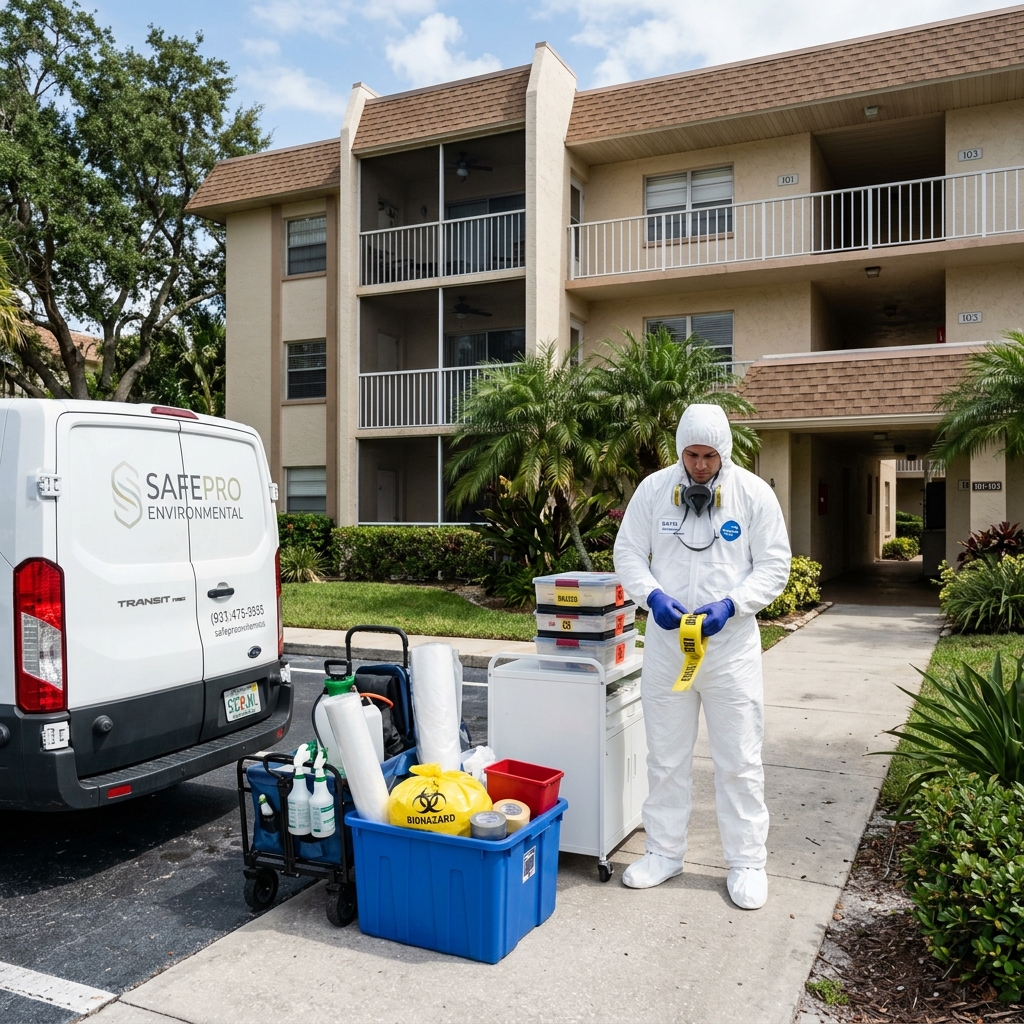
When a biohazard event happens in a single-family home, the contamination is largely isolated. But when an incident occurs in a high-rise condominium in Downtown Fort Myers or an apartment complex, the risks multiply rapidly. The primary concerns in multi-unit buildings are odor migration and cross-contamination.
- Shared HVAC Systems: In many older condo buildings, the ductwork is connected, or the units share common return air spaces. If a decomposition event occurs, the volatile organic compounds (VOCs) that carry the odor will get sucked into the HVAC system and blown directly into neighboring units.
- Plumbing Chases: The hollow spaces between walls where pipes run (chases) are like chimneys for bad smells. Biological odors easily travel up and down these chases, affecting floors above and below the incident.
- Discreet Access: Transporting biohazardous waste through a shared lobby, hallway, or elevator requires strict containment procedures. It also requires a high level of discretion to avoid alarming other residents or guests in vacation rentals.
In a condo or apartment, failing to properly contain a biohazard scene can lead to severe liability for property managers if neighboring tenants are exposed to odors or bloodborne pathogens.
Structural Challenges in Older Fort Myers Homes
Many homes along McGregor Boulevard and in the Edison Park historic district were built decades ago. The construction materials used in the mid-20th century interact very differently with biological fluids compared to modern synthetic materials.
Original Hardwood and Subfloors
Older homes often feature original hardwood floors. While beautiful, aged wood is highly porous. If a blood cleanup is required, the fluid does not simply sit on the surface; it seeps through the cracks, soaking into the tongue-and-groove joints and the subfloor beneath. In these situations, wiping the surface is useless. Technicians must often carefully remove sections of the historic flooring to access and treat the contaminated structure underneath.
Plaster Walls vs Drywall
Unlike modern drywall, which can be easily cut out and replaced in neat squares, older plaster walls can crumble when disturbed. If biological fluids splash onto a plaster wall during a trauma event, technicians must use highly specialized extraction and sealing techniques to decontaminate the wall without destroying the structural integrity of the room.
If you own an older home, inform the remediation company about the age of the property when you call. This helps them bring the right tools for delicate structural removal and specialized odor removal.
Why Professional Containment is Non-Negotiable
Because of these structural challenges, professional biohazard remediation involves creating a "clean room" environment. Technicians use heavy-duty plastic sheeting and negative air machines equipped with HEPA filters. This ensures that any airborne bacteria, mold spores from hoarding cleanup, or aerosolized blood droplets are captured rather than pushed into other rooms or neighboring apartments.
"The goal of professional remediation in a multi-unit building is two-fold: completely decontaminate the affected unit, while ensuring zero impact on the surrounding neighbors."
By hiring experienced professionals who understand the nuances of Florida architecture—from historic bungalows to modern high-rises—you ensure that the property is fully restored, liability is minimized, and occupants can return safely.